
Archives January 2026

Using AI Without Losing Our Humanity: Building a Smarter, More Human Future

Working Smarter Not Harder

Using AI Without Losing Our Humanity: Building a Smarter, More Human Future
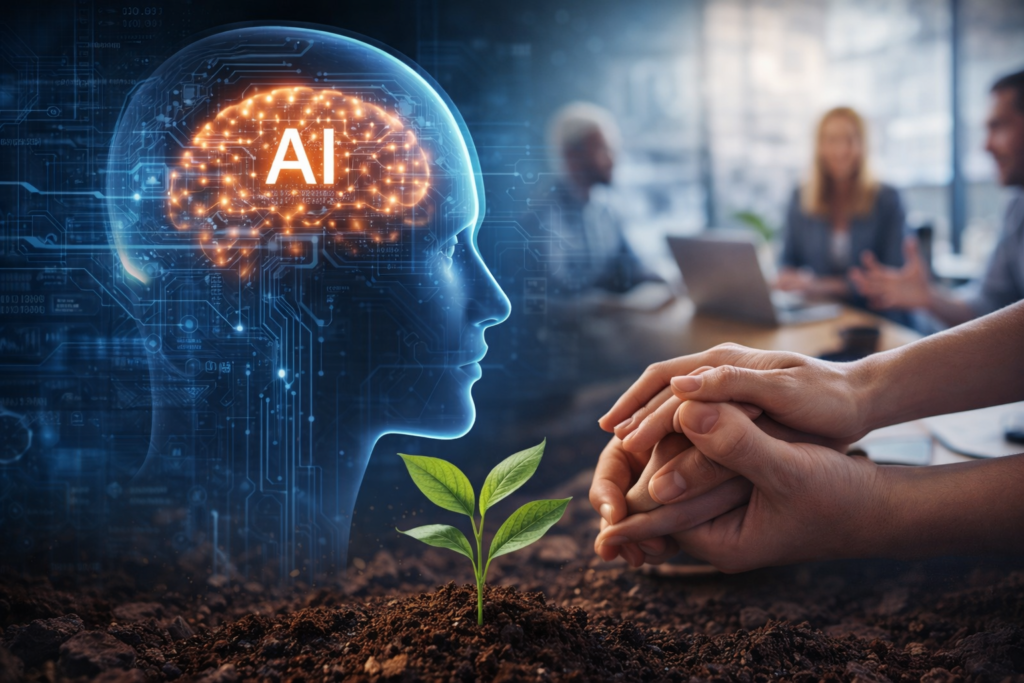
Artificial Intelligence is no longer a distant concept or a future promise. It is here, it is powerful, and it is reshaping how we work, think, and build.

But the real question is not whether we should use AI.
The question is how we use it — and why.

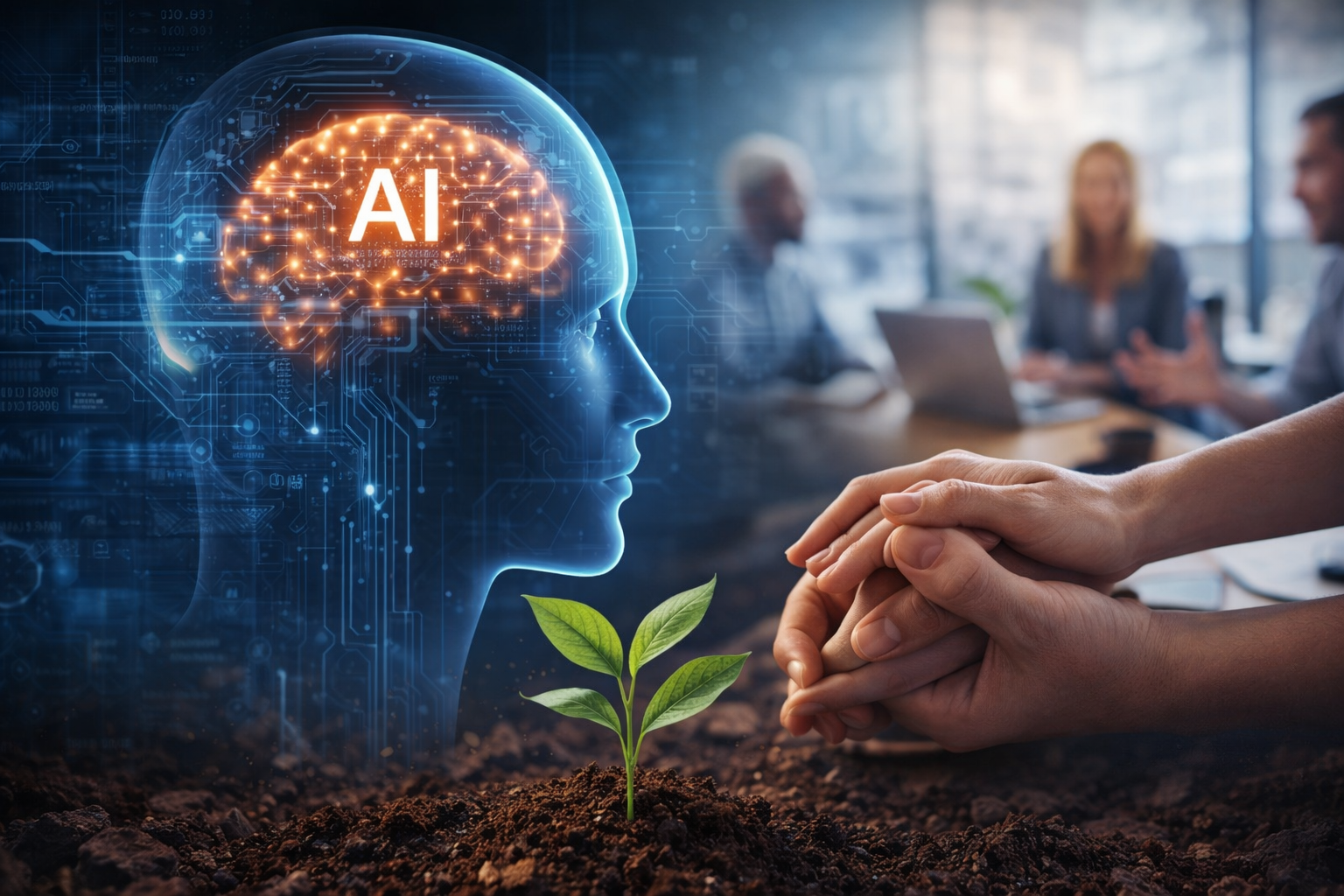
At ECAHLI, we believe AI should never replace human value. Instead, it should protect it, amplify it, and give it room to grow.

Technology Should Serve Humanity, Not Erase It

For generations, progress has been measured by how much faster we could work, how much more we could produce, and how efficiently we could operate. Somewhere along the way, speed replaced meaning, and productivity replaced presence.

AI gives us a chance to correct that.

When used intentionally, AI removes the tedious, repetitive, and time-consuming tasks that drain human energy:

  • Administrative overload

  • Data processing

  • Repetitive reporting

  • Manual coordination

By offloading these tasks to intelligent systems, we don’t become less human — we become more human.

Freeing Time for What Truly Matters

Time is our most limited resource.

By integrating AI into development, operations, and daily work, we free up something incredibly valuable: mental and emotional space.

That space is where:

  • Creativity lives

  • Innovation happens

  • Problem-solving deepens

  • Relationships strengthen

  • Families reconnect

  • Communities grow

AI allows us to redirect our energy away from survival-mode work and back toward invention, design, collaboration, and care.

This is not about working less — it’s about working with purpose.
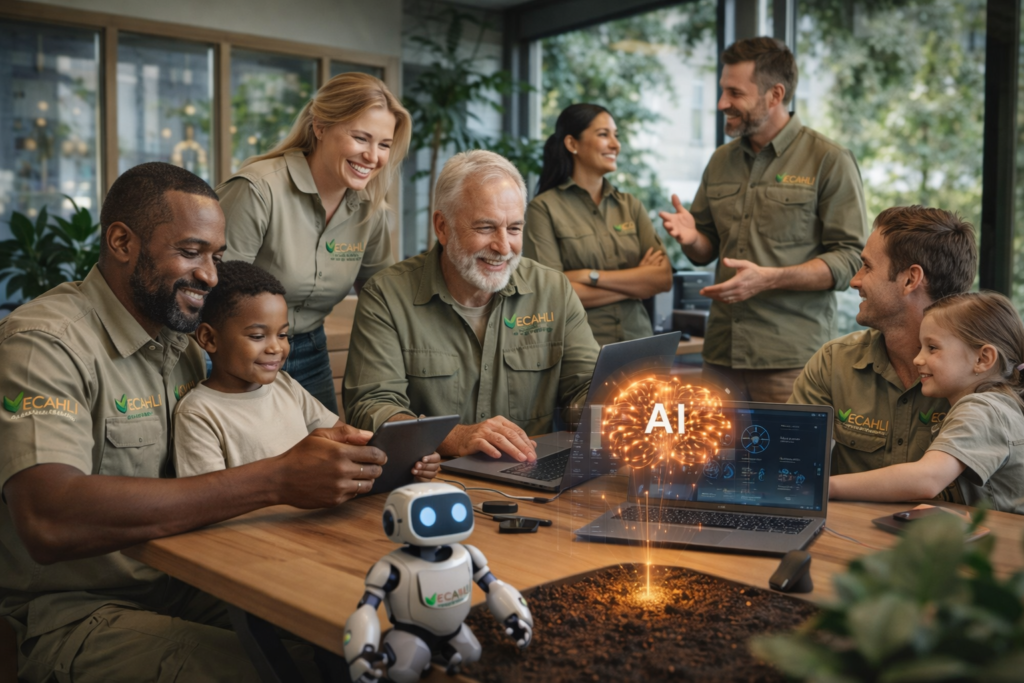
Working Smarter, Not Harder — Made Real

“Work smarter, not harder” has long been a slogan. AI finally makes it practical.

When human creativity is paired with intelligent systems:

  • Decisions become clearer
  • Planning becomes more accurate
  • Resources are used more responsibly
  • Mistakes are reduced
  • Innovation accelerates

Humans bring vision, ethics, empathy, and imagination.
AI brings speed, structure, pattern recognition, and scale.

Together, they form something far more powerful than either alone.

AI as a Tool for a Sustainable Future

Sustainability is not just environmental — it is human.

  • A sustainable future requires:
  • Healthier work-life balance
  • Reduced burnout
  • Smarter use of resources
  • Long-term thinking over short-term pressure

AI helps us design systems that are efficient without being exploitative, productive without being dehumanising.

When technology supports people instead of replacing them, sustainability stops being an ideal and starts becoming a lived reality.

Choosing Integration Over Fear

Fear often arises when technology feels imposed instead of integrated.

The goal is not to let AI decide for us.
The goal is to let AI support us — while humans remain responsible for values, direction, and impact.

We must choose:

  • Conscious adoption over blind automation
  • Collaboration over replacement
  • Ethics over efficiency alone

The future doesn’t belong to machines.
It belongs to humans who know how to use machines wisely.

A Future Where Humanity Leads

At its best, AI gives us back what modern systems have slowly taken away:

  • Time
  • Focus
  • Presence
  • Creative freedom

When we use AI to handle what machines do best, humans are finally free to do what only humans can do:

  • Create.
  • Invent.
  • Care.
  • Build meaningful lives.

That is the future worth designing.

Where These Principles Come to Life

At ECAHLI, these principles are not theoretical — they are actively shaping how we design communities, work environments, and development systems.

We use AI and intelligent systems to remove unnecessary complexity, streamline operations, and reduce administrative burden, so that people can focus on what truly matters: building, learning, creating, and living meaningful lives.

By combining technology with human-centred design, ECAHLI aims to create environments where innovation supports dignity, productivity supports balance, and progress never comes at the cost of humanity.

This is not about choosing between technology and people.
It is about ensuring technology works in service of people.
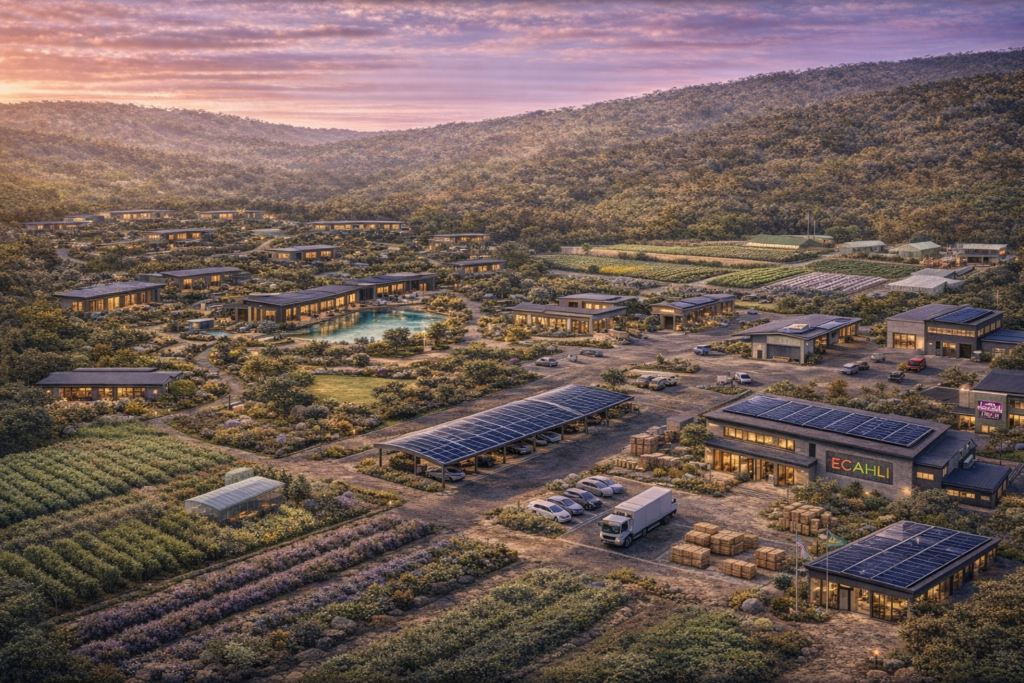
Award-Winning Self-Sustainable Community Design

Designing the Future: Award-Winning Self-Sustainable Community Design

By Petrus Van Der Merwe
Award-winning self-sustainable community design specialising in sustainable construction, housing, agriculture, renewable energy, and long-term resilience.

The World Needs More Than Green Ideas — It Needs Working Systems

Sustainability is no longer a trend.
It is a necessity.

Across the world, governments, investors, developers, and communities are searching for solutions that go beyond short-term fixes — solutions that actually work, endure economic cycles, respect human dignity, and regenerate both land and lives.

This is where my work begins.

I am Petrus Van Der Merwe, an award-winning self-sustainable community designer and long-term sustainability specialist, focused on creating fully integrated, real-world systems — not concepts, not theories, but operational communities built to thrive for generations.

What I Design: Complete Self-Sustainable Ecosystems

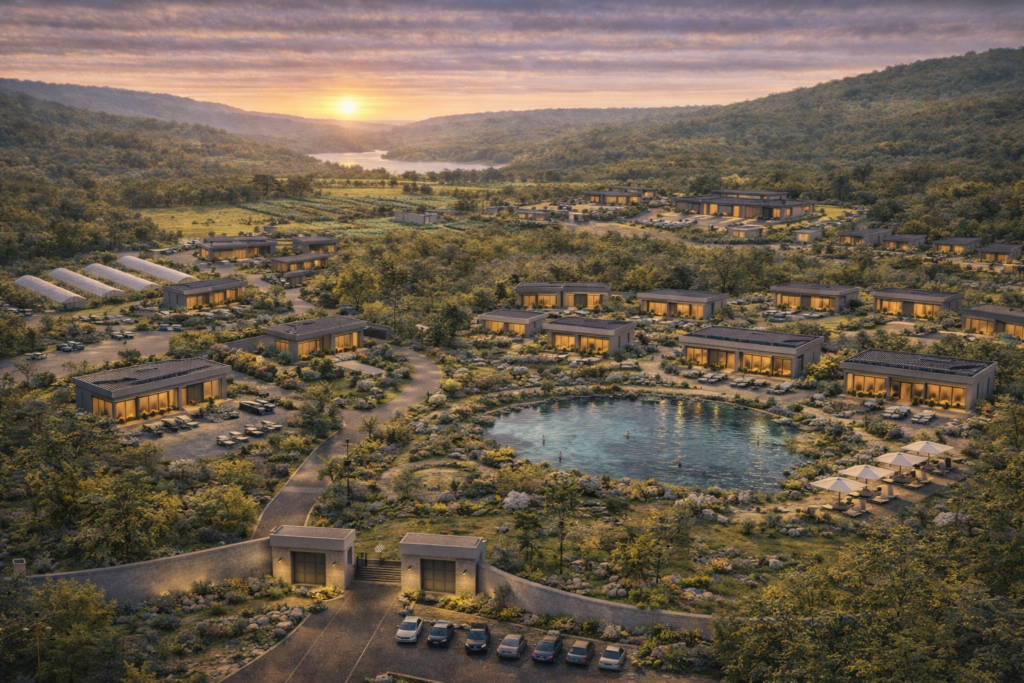
My work is not limited to individual buildings or isolated technologies. I design complete, interconnected ecosystems where housing, agriculture, energy, work, education, and security function together as one resilient system.

Sustainable Construction

I specialise in advanced sustainable construction methods, including:

  • Low-impact and regenerative materials
  • Modular and scalable building systems
  • 3D-printed and alternative construction technologies
  • Climate-adapted design for diverse regions

Every structure is designed to reduce lifetime environmental impact while increasing durability, efficiency, and affordability.

Each project is designed for long-term independence, economic viability, and human wellbeing.

Sustainable Housing

Housing is not just shelter — it is the foundation of dignity and stability.

My housing designs focus on:
  • Energy-efficient, climate-responsive homes
  • Affordable yet high-quality living environments
  • Community-oriented layouts that encourage connection
  • Long-term maintenance reduction and cost control

The goal is simple: homes people can afford, maintain, and be proud of — long term.

Sustainable Agriculture

True sustainability starts with food security.

I design agricultural systems that integrate:

  • Regenerative farming practices
  • Community-based food production
  • Aquaponics, agroforestry, and mixed-use farming
  • Local employment and skills development

These systems reduce dependency on external supply chains while restoring land health and food sovereignty.

Sustainable Renewable Energy Solutions

Energy independence is non-negotiable in future communities.

My work includes:
  • Hybrid renewable energy systems (solar, wind, hydro, emerging tech)
  • Microgrids and off-grid energy design
  • Energy storage and smart load management
  • Scalable infrastructure for future expansion

The result: stable, affordable, and resilient energy systems that protect communities from rising costs and grid failures.

Security & Resilience by Design

Security is not about fences alone — it’s about intelligent planning.

I design communities with:
  • Natural surveillance through layout and visibility
  • Controlled access without creating “fortress” environments
  • Infrastructure resilience against social, economic, and environmental shocks
  • Human-centred safety that preserves freedom and dignity

Security is built into the system — not added as an afterthought.

Award-Winning, Field-Tested, and Future-Focused

My work has gained recognition because it is practical, scalable, and deeply human. I do not design for trends — I design for decades.

Every project is guided by:

  • Long-term sustainability planning
  • Economic realism and operational feasibility
  • Social impact and poverty prevention
  • Repopulation and revitalisation of underdeveloped regions

These are not abstract ideals — they are measurable outcomes.

Who I Work With

My services are tailored for:

  • Governments and municipalities
  • Private investors and developers
  • NGOs and humanitarian initiatives
  • Visionaries seeking to build intentional communities
  • Regions facing depopulation, housing shortages, or economic decline

Each engagement is highly customised, grounded in local realities, and built for long-term success.

Building What Comes Next

The future will not be built by those who talk the loudest —
it will be built by those who design systems that endure.

If you are seeking a sustainability partner who understands construction, energy, agriculture, housing, security, and human systems as one, then we are already aligned.

The next generation of communities must be self-sufficient, resilient, and deeply human.

That is the work I do.

Let’s Design the Future — Properly

If you would like to explore collaboration, consulting, or community development projects, I invite you to connect through petrusvdmerwe.com.

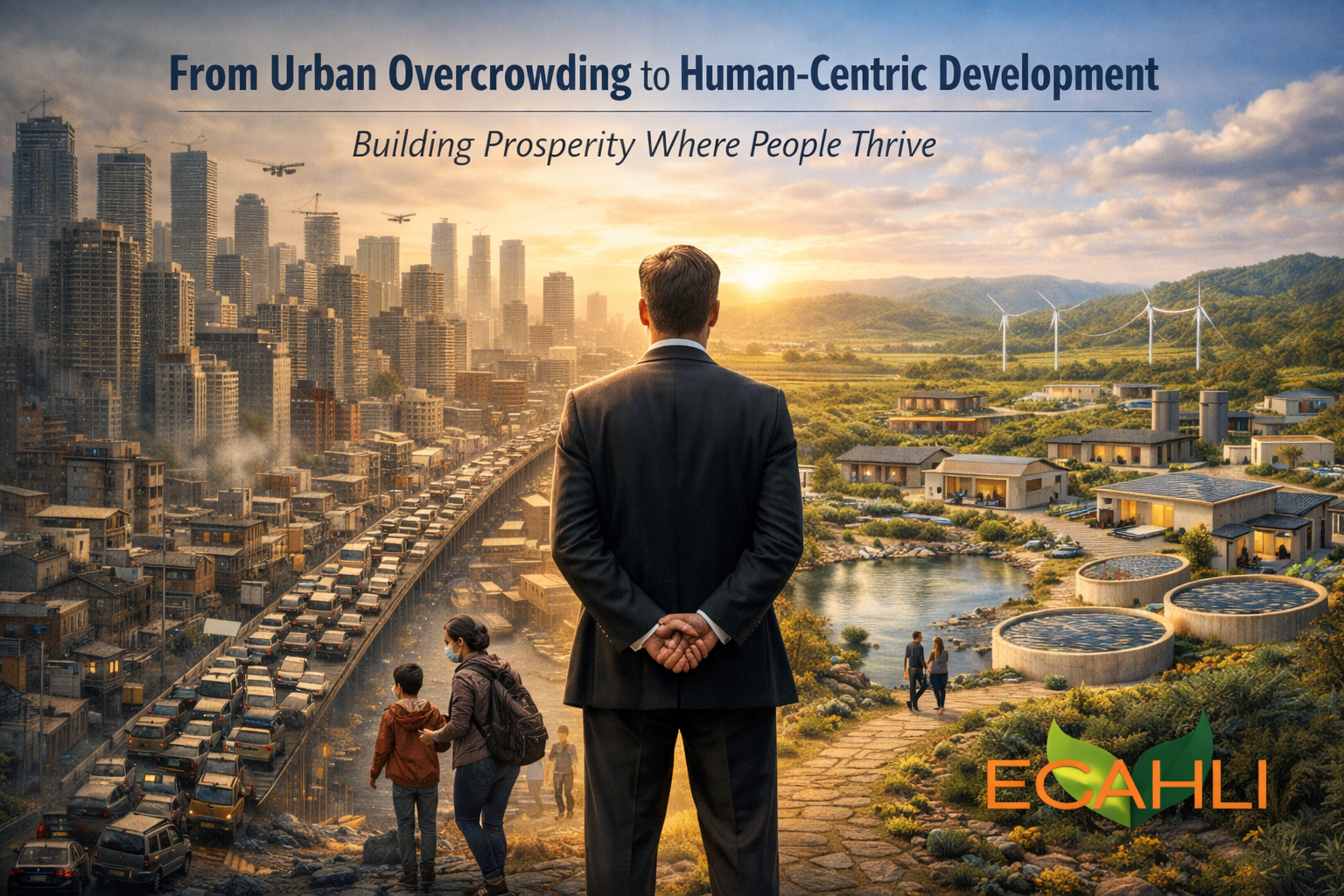
From Urban Overcrowding to Human-Centric Development

From Urban Overcrowding to Human-Centric Development

From Urban Overcrowding to Human-Centric Development

From Urban Overcrowding to Human-Centric Development

Why the Future Belongs to Nations That Invest in People, Not Just Cities

Across the globe, governments and investors are facing a growing contradiction.

Cities are overcrowded, overstretched, and increasingly expensive to maintain — while vast rural regions and smaller towns are emptying out, underutilised, and economically stagnant.

More than 56% of the world’s population now lives in urban areas, a figure projected to rise to nearly 70% by 2050. Infrastructure systems — housing, transport, healthcare, utilities, and social services — were never designed to absorb this level of concentrated growth.

At the same time, many countries are experiencing depopulation outside their major cities. Entire regions are losing working-age populations, talent, and long-term economic viability.

This is not a coincidence.
It is the direct result of how development has been designed for decades.

The Real Issue Is Not Population — It Is Structure

Urban overcrowding is often treated as a housing problem.
Rural decline is treated as a demographic problem.

In reality, both stem from the same root cause:

Opportunity has been centralised instead of distributed.

When work, innovation, education, and capital are concentrated in a few urban hubs, people have no choice but to follow — even when cities can no longer support them with dignity or stability.

The consequence is predictable:

  • Cities absorb pressure they cannot sustain
  • Rural regions lose relevance and investment
  • Governments face rising costs with diminishing returns

What is missing is not funding.
It is a different development model.

A Different Way Forward: Human-Centric Development

My work focuses on designing and implementing human-centric development systems — frameworks that rebalance population, industry, and opportunity in a way that strengthens national resilience rather than weakening it.

Instead of asking, “How do we expand cities further?”
We ask, “How do we build places where people can genuinely thrive?”

This approach is built on a few fundamental principles:

  • People are economic assets, not social liabilities
  • Talent exists everywhere, but opportunity does not
  • Industry should follow human potential — not the other way around
  • Long-term stability comes from decentralisation, not concentration

What My Services Focus On

I work with governments, institutions, and investors to:

  • Reduce pressure on overcrowded urban centres
  • Repopulate rural and underdeveloped regions with purpose
  • Identify and support individuals with skills, ideas, and entrepreneurial capacity
  • Build integrated ecosystems of housing, work, training, and industry
  • Create long-term, self-sustaining economic zones

This is not relocation for its own sake.
It is structured regeneration — aligning people, infrastructure, and industry into systems that produce measurable outcomes.

ECAHLI: From Strategy to Execution

This philosophy is executed through ECAHLI — a scalable development framework designed to transform underutilised regions into productive, dignified, and economically resilient communities.

ECAHLI integrates:

  • Sustainable housing
  • Skills development and training
  • Local manufacturing and industry
  • Governance and community structure
  • Long-term economic participation

Rather than treating people as beneficiaries, ECAHLI positions them as contributors, builders, and stakeholders.

This shift is critical.

When people have ownership, purpose, and the ability to create value, dependency declines — and resilience increases.

Why This Matters to Governments and Investors

Countries such as Italy, Portugal, Uruguay, and many others face a similar strategic challenge:

  • Aging and declining rural populations
  • Youth migration toward cities or abroad
  • Underutilised land, infrastructure, and public assets
  • Increasing pressure on urban systems and public budgets

Human-centric, decentralised development offers a way to:

  • Rebalance population distribution
  • Retain and attract talent
  • Activate dormant regions
  • Create new industrial and innovation hubs
  • Reduce long-term social and infrastructure costs

For governments, this means greater national stability.
For investors, it means long-term, real-economy value creation.

The Shift Required

The future will not be built by expanding what is already failing.

It will be built by leaders willing to:

  • Rethink where development happens
  • Invest in people as drivers of growth
  • Design systems that reward contribution, not dependency

This is not ideology.
It is pragmatic, strategic, and increasingly unavoidable.

A Conversation Worth Having

If you are a policymaker, institutional partner, or long-term investor seeking solutions to:

  • Urban overcrowding
  • Rural depopulation
  • Talent loss
  • Economic imbalance

Then this is not a theoretical discussion — it is a strategic necessity.

To learn more about my work and development approach, visit:
👉 https://petrusvdmerwe.com/

The nations that thrive in the coming decades will not be those that build bigger cities —
but those that build better systems for people