We live in a defining era of human history — a time not only of innovation and technological growth, but of deep reflection.
For generations, humanity has been conditioned to believe that progress comes only through relentless struggle — working harder, pushing further, sacrificing more.
But today, a new realization is emerging:
True sustainable change will not come from exhaustion — it will come from awakening.
From working smarter.
From building consciously.
From aligning human effort with long-term purpose.
To create meaningful change, we must first see reality clearly — both its promise and its failures.
Across decades, people have witnessed corruption, inequality, systemic inefficiencies, and the erosion of public trust. Systems designed to serve humanity have, in many cases, fallen short of their purpose.
Societies have been shaped by categorization and division — people labeled, sorted, and grouped in ways that often limit rather than empower.
Through social conditioning and institutional programming, humanity has too often been diverted from its true potential:
Yet our differences — cultural, intellectual, and creative — are not weaknesses.
They are humanity’s greatest strength.
A global shift in awareness is underway.
People are beginning to recognize that real power does not live solely within governments or institutions — it lives within communities, innovators, builders, and visionaries willing to take responsibility for the future.
This perspective is not anti-government.
Governance plays an essential role in structure and regulation.
But there is a clear distinction between systems that serve the people and systems weakened by corruption, inefficiency, or unaccountable influence.
When systems fail, humanity must not fail with them.
Instead, we must innovate beyond them — building new frameworks grounded in:
Transparency
Sustainability
Equality
Opportunity
Shared prosperity
Working smarter means rethinking how we live, produce, and grow.
It means transitioning:
Sustainable development is not limited to renewable energy or eco-architecture.
It is about designing integrated human ecosystems — environments where people can thrive socially, economically, and spiritually.
Systems that provide:
This is sustainable empowerment — not aid, but opportunity.
Humanity now stands at a crossroads.
Some will hold onto familiar systems — even if those systems are failing.
Others — the pioneers — will step forward into new paradigms of living, working, and building.
This is not a divide rooted in conflict, but in consciousness.
A difference between those waiting for change…
And those choosing to create it.
History has always been shaped by pioneers willing to imagine and build new societal models.
Today is no different.
One of the greatest opportunities for sustainable change lies in the revitalization of rural and underdeveloped regions around the world.
Many of these areas are:
Population-deprived
Industry-deprived
Economically overlooked
Infrastructure-limited
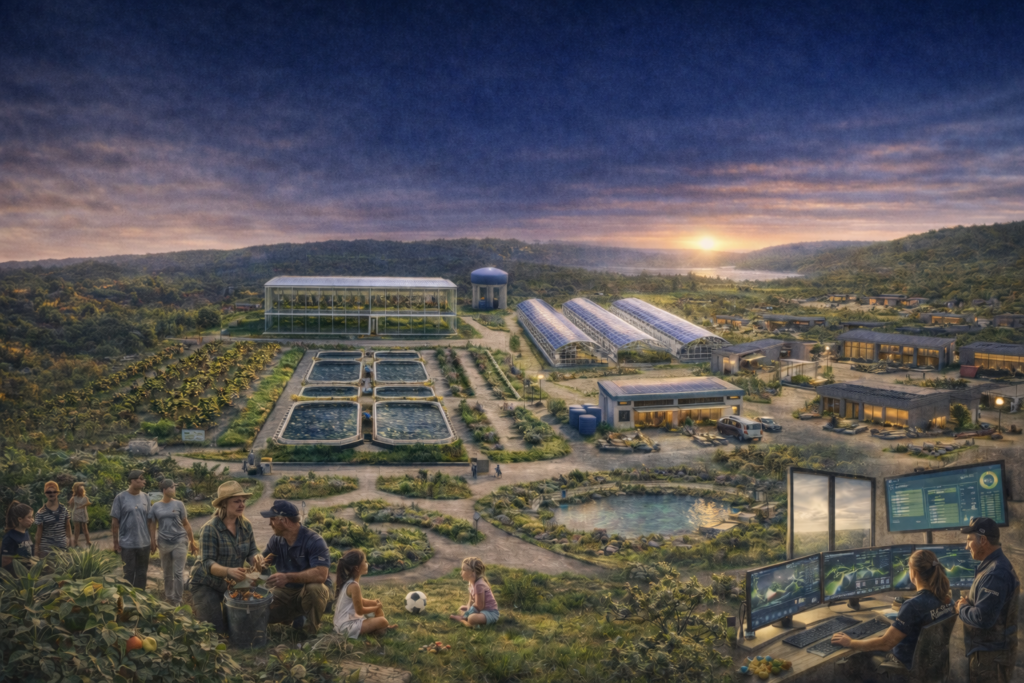
By introducing integrated sustainable development models into these regions, we can:
Repopulate communities
Create localized industry
Deliver training and employment
Build housing ecosystems
Establish food and energy security
This is not charity.
This is dignified economic activation.
It offers individuals and families a genuine fresh start — built on participation, ownership, and growth.
The future is not something that arrives by chance.
It is designed through intentional action taken today.
Every sustainable home built…
Every training center opened…
Every agricultural system developed…
Every ethical industry launched…
…lays the foundation for the civilization future generations will inherit.
Planning ahead is no longer optional — it is a shared human responsibility.
Humanity stands at a defining threshold.
We can continue repeating cycles of division, dependency, and systemic failure…
Or we can choose a different path:
Freedom over control
Equality over exploitation
Peace over conflict
Sustainability over short-term gain
Sustainable change begins when individuals and communities make a conscious decision to act — to build systems that honor both people and planet.
To work smarter.
To live consciously.
To create lasting impact.
The future is not written for us.
It is built by us.
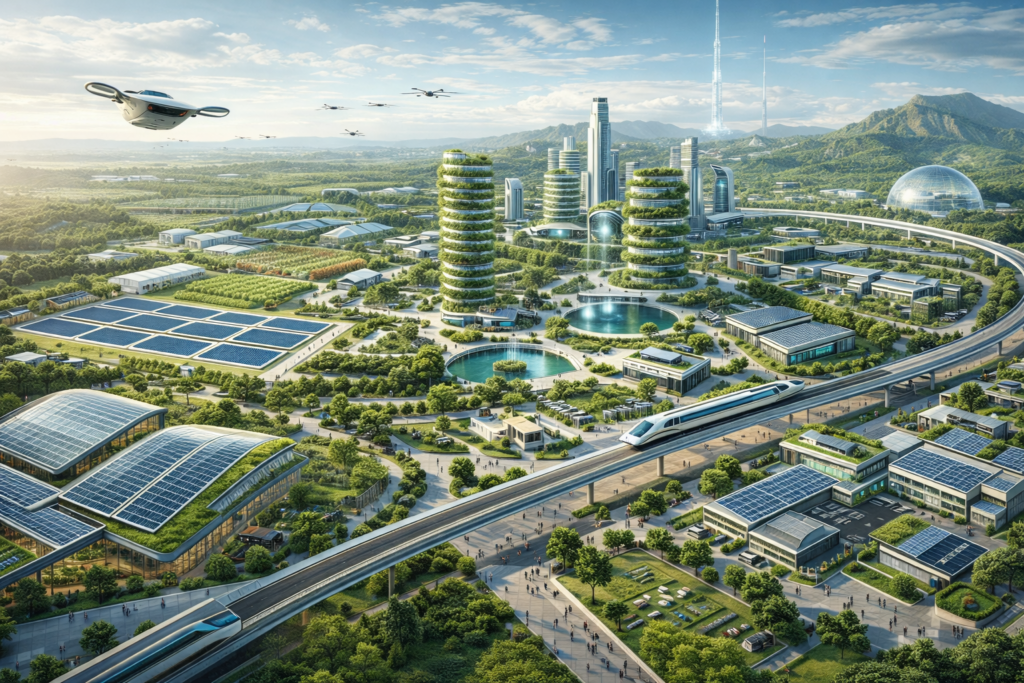
And the time to begin is now. Have a look at the future in Sustainable Green Economic with ECAHLI