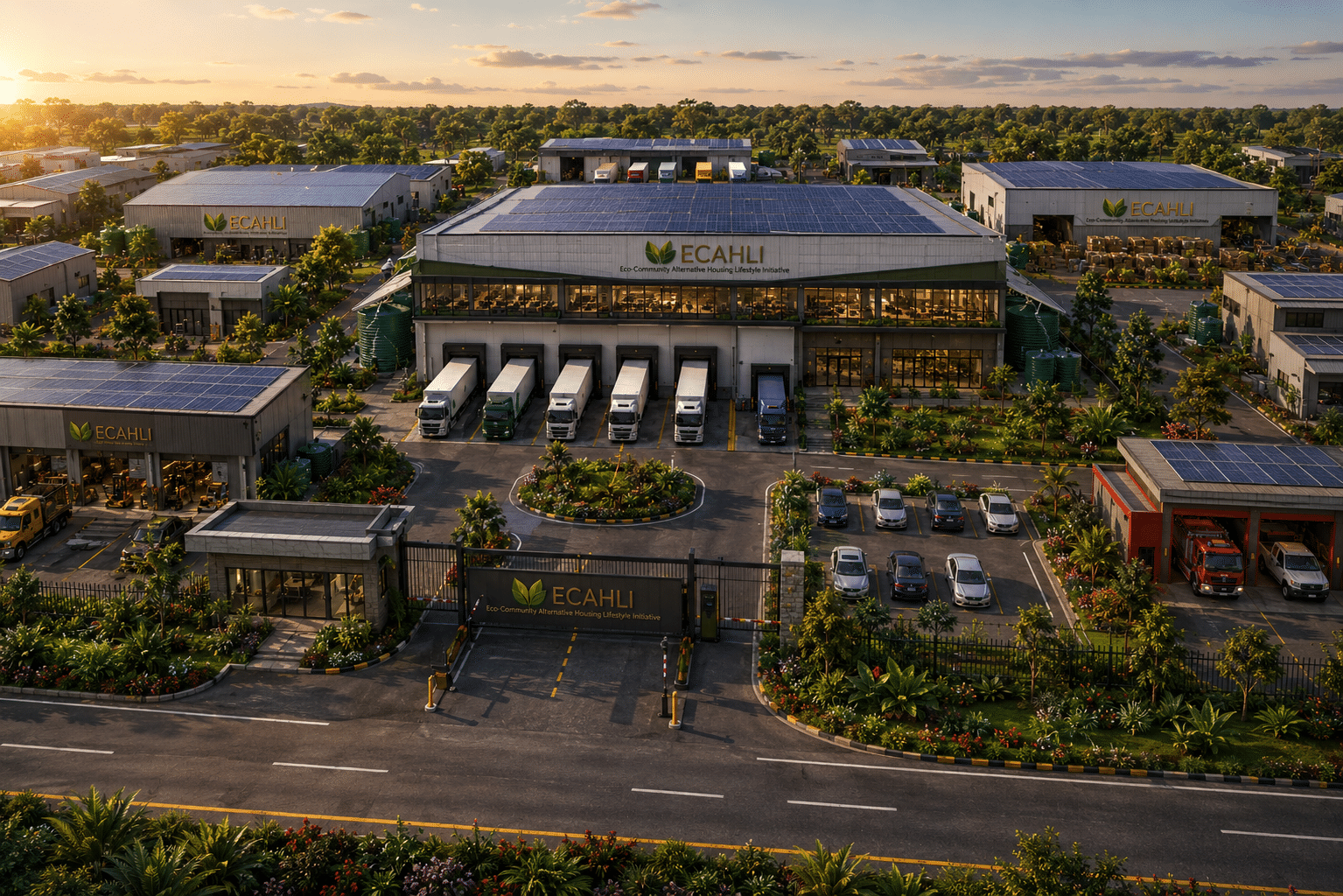
Rural undeveloped area nodes
On open, underdeveloped land, a node is planned from the ground up. Homes, farms, energy, water, schools, clinics and an industrial zone are laid out together, creating a new economic centre for the surrounding region.
The Eco-Community Alternative Housing Lifestyle Initiative: an award-winning platform and global movement that builds complete, self-sustaining communities where housing, jobs, food, clean energy, education, healthcare and local industry grow together.
Our mission: to restore dignity, rebuild rural economies and give underserved communities a practical, dependable path to stability and growth.
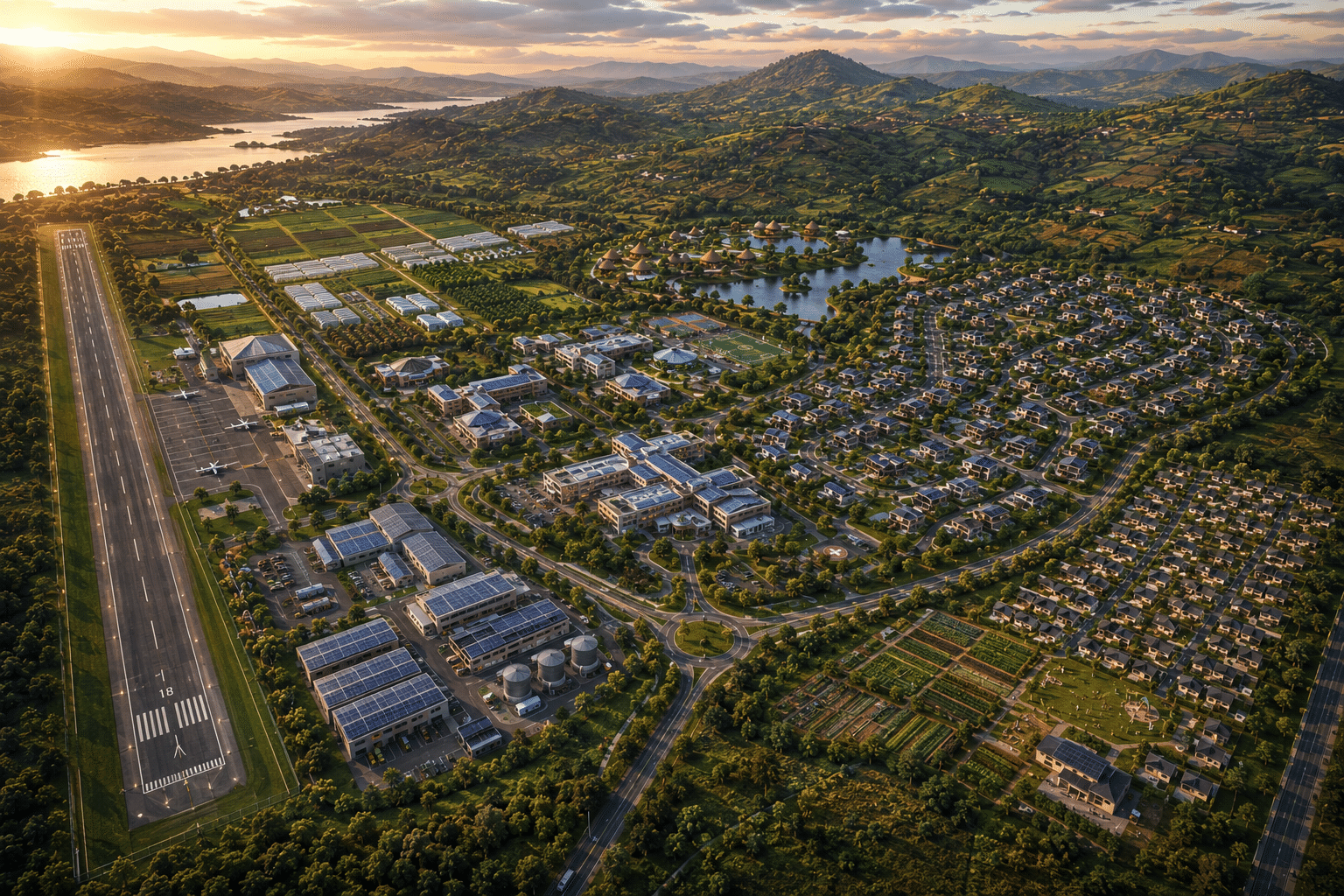
ECAHLI stands for Eco-Community Alternative Housing Lifestyle Initiative. It is a complete design for a community, not just a set of houses.
Most development projects deliver one piece: a building, a clinic or a farm programme. People still lack work, or food, or power, and the project fades. ECAHLI delivers every piece together, so each one supports the others. A family has a secure home, a school nearby, a clinic, reliable energy, and a local job in an industry that feeds the region.
The model was created by Petrus Van Der Merwe, founder and architect of ECAHLI. The focus remains on the communities it serves and the systems that make them last.
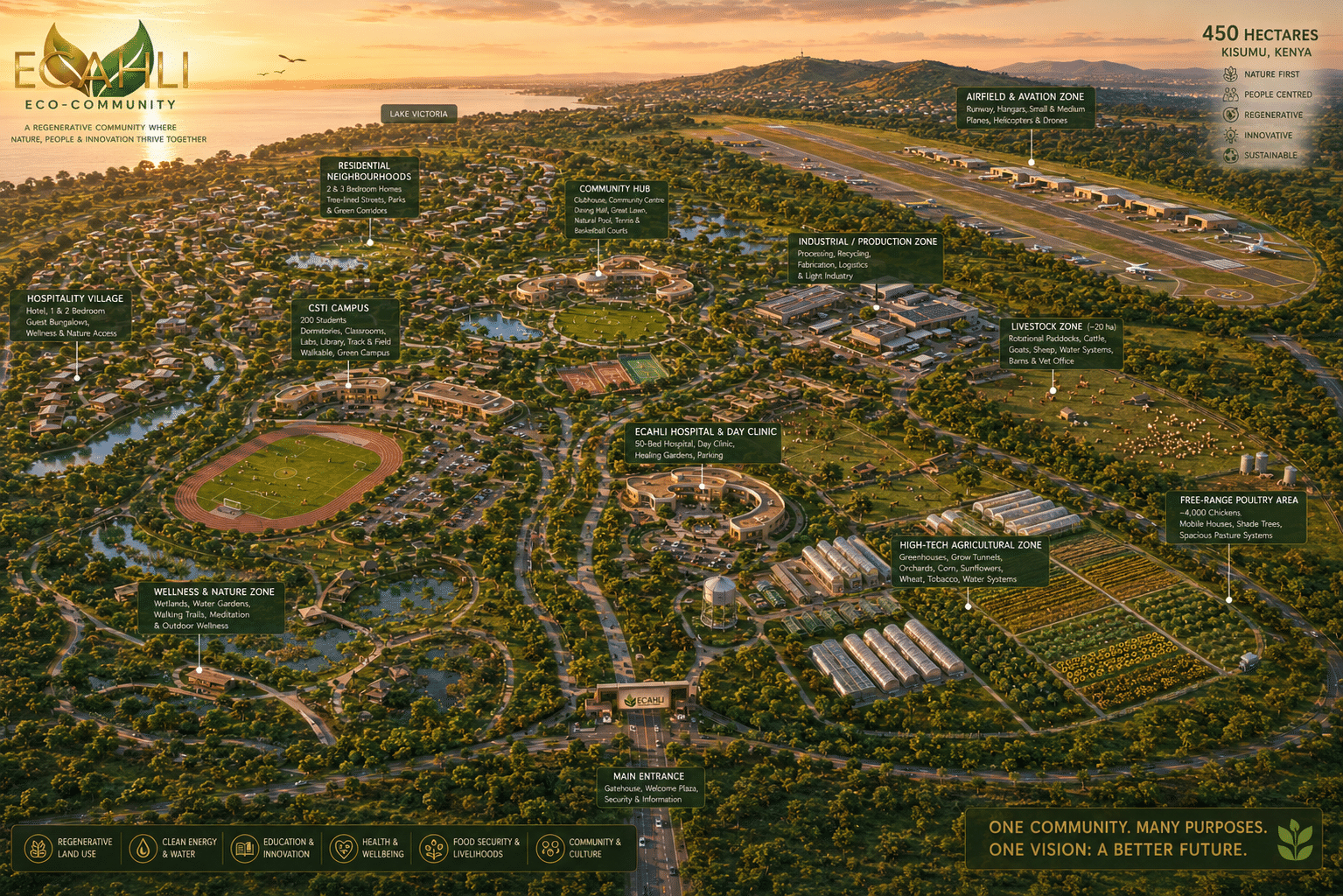
The ECAHLI platform is a repeatable, modular framework: community designs, technology systems, construction methods, industry blueprints and operating models. Each new community, called a node, is built from the same proven components and adapted to local land, climate, culture and economy. Because it is structured, it can be planned, funded, delivered and scaled with confidence.
A movement is a growing network of communities, partners, institutions, governments, investors, builders, educators and local leaders who share one conviction: every person deserves a secure home, meaningful work, food, energy, learning and care. ECAHLI connects that aligned effort so it compounds instead of scattering.
Rural regions and underserved populations face the same linked problems around the world.
These problems reinforce each other, so solving one at a time rarely works. ECAHLI responds with one structured, scalable model that addresses all of them at once.
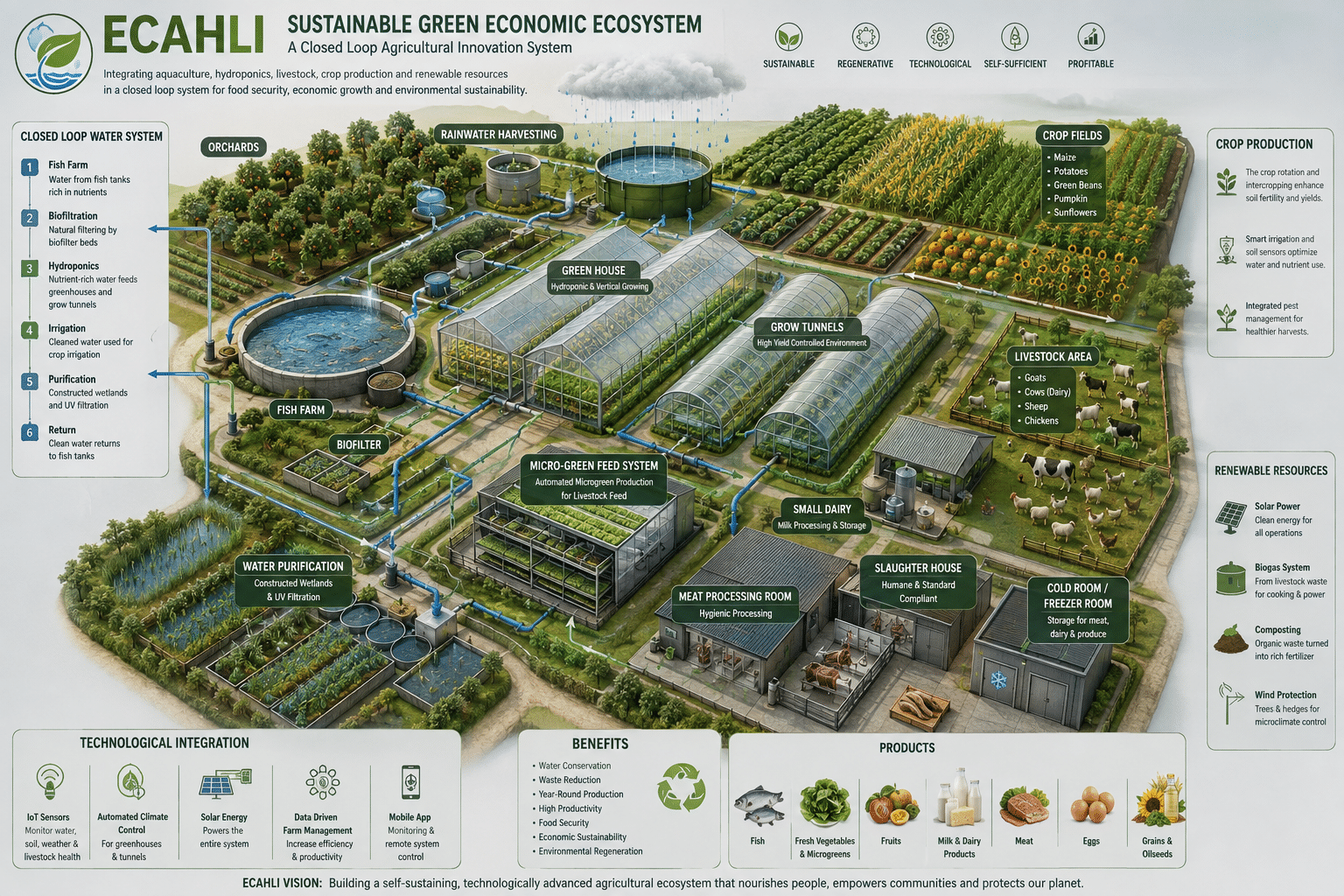
Every node delivers the same outcome: jobs, housing, education, healthcare and a thriving industry in one community. What differs is where it is built.
On open, underdeveloped land, a node is planned from the ground up. Homes, farms, energy, water, schools, clinics and an industrial zone are laid out together, creating a new economic centre for the surrounding region.
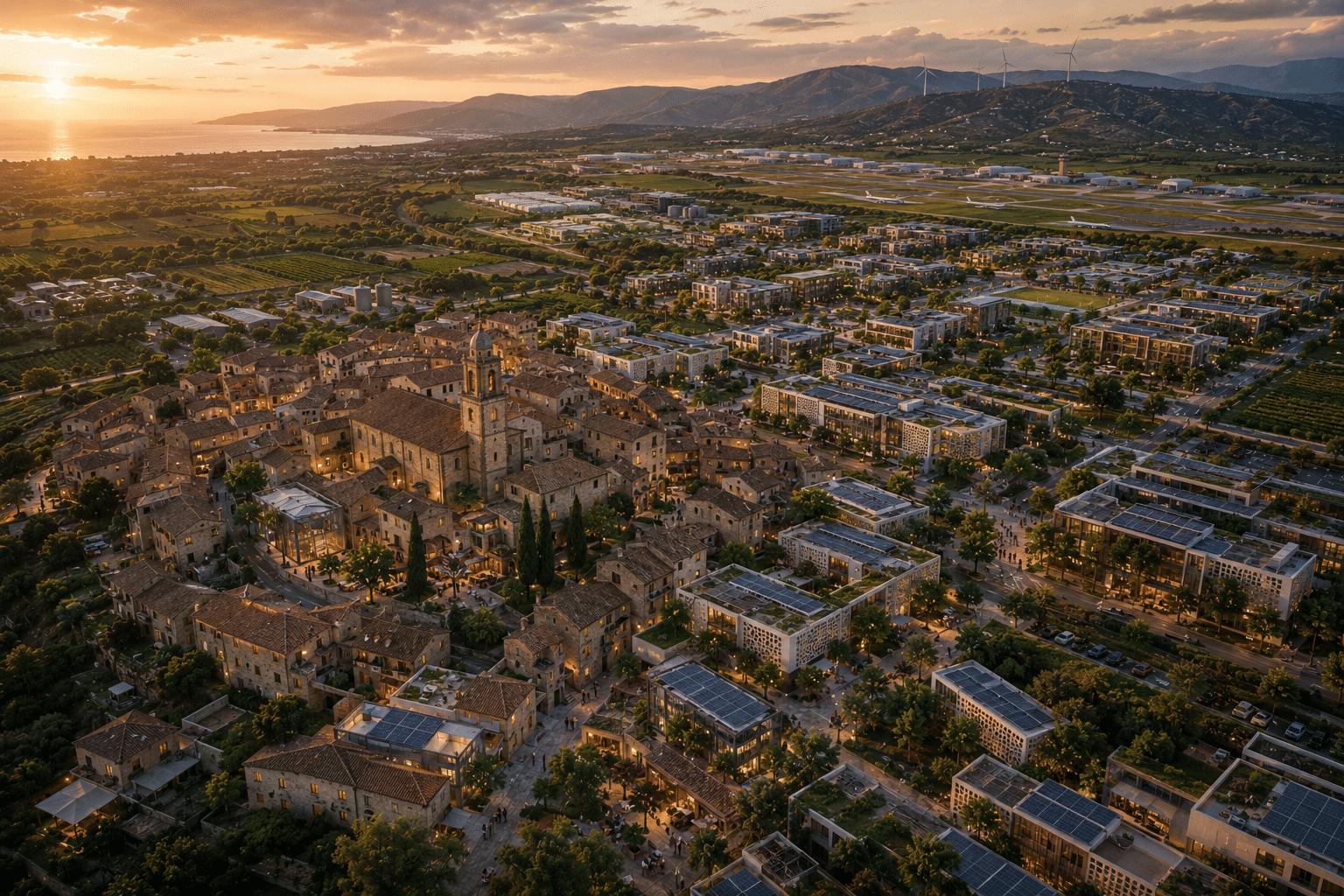
Thousands of historic towns and villages sit empty. ECAHLI brings them back to life by preserving their architectural heritage and charm while integrating advanced ECAHLI node systems for energy, water, services and industry. Old stone streets gain new jobs, homes, schools and clinics, and a community's history stays part of its future.
Advanced sustainable development technologies and systems let work run in parallel instead of in sequence. The ECAHLI delivery framework follows five overlapping phases.
Site assessment, local engagement, land and water analysis, and adaptation of the node design to local climate and culture. For heritage nodes: architectural survey and preservation planning.
Renewable energy, water and sanitation, roads, digital connectivity and soil and farm systems, using modular and prefabricated methods to move quickly.
Energy-efficient housing, school, clinic and community spaces, built with local labour and trained local crews.
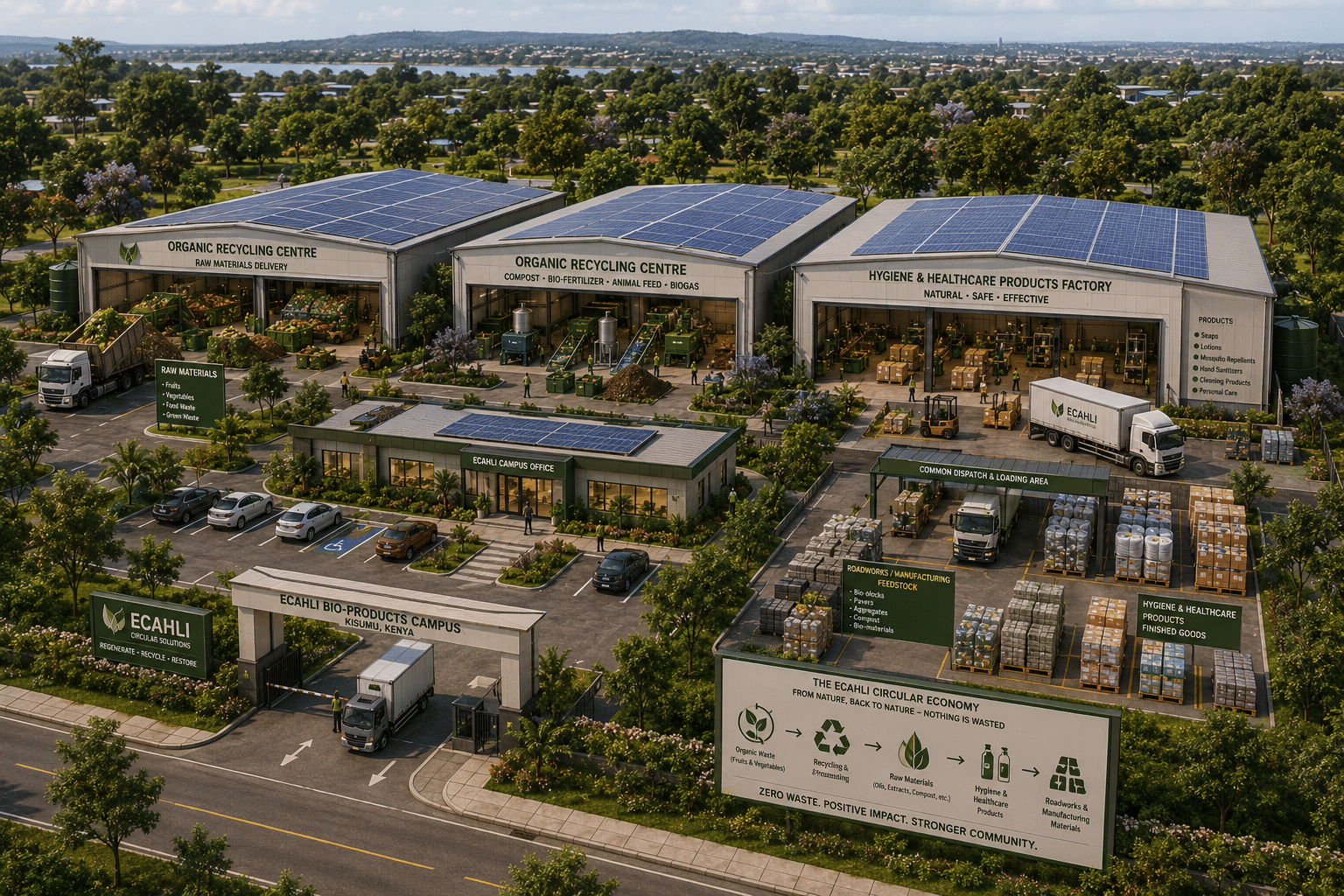
Food manufacturing, organic recycling and a cold chain wholesale distribution hub that connects local producers to regional markets.
System testing, skills certification, and a handover to a trained community operating team, so the node runs on local capability.
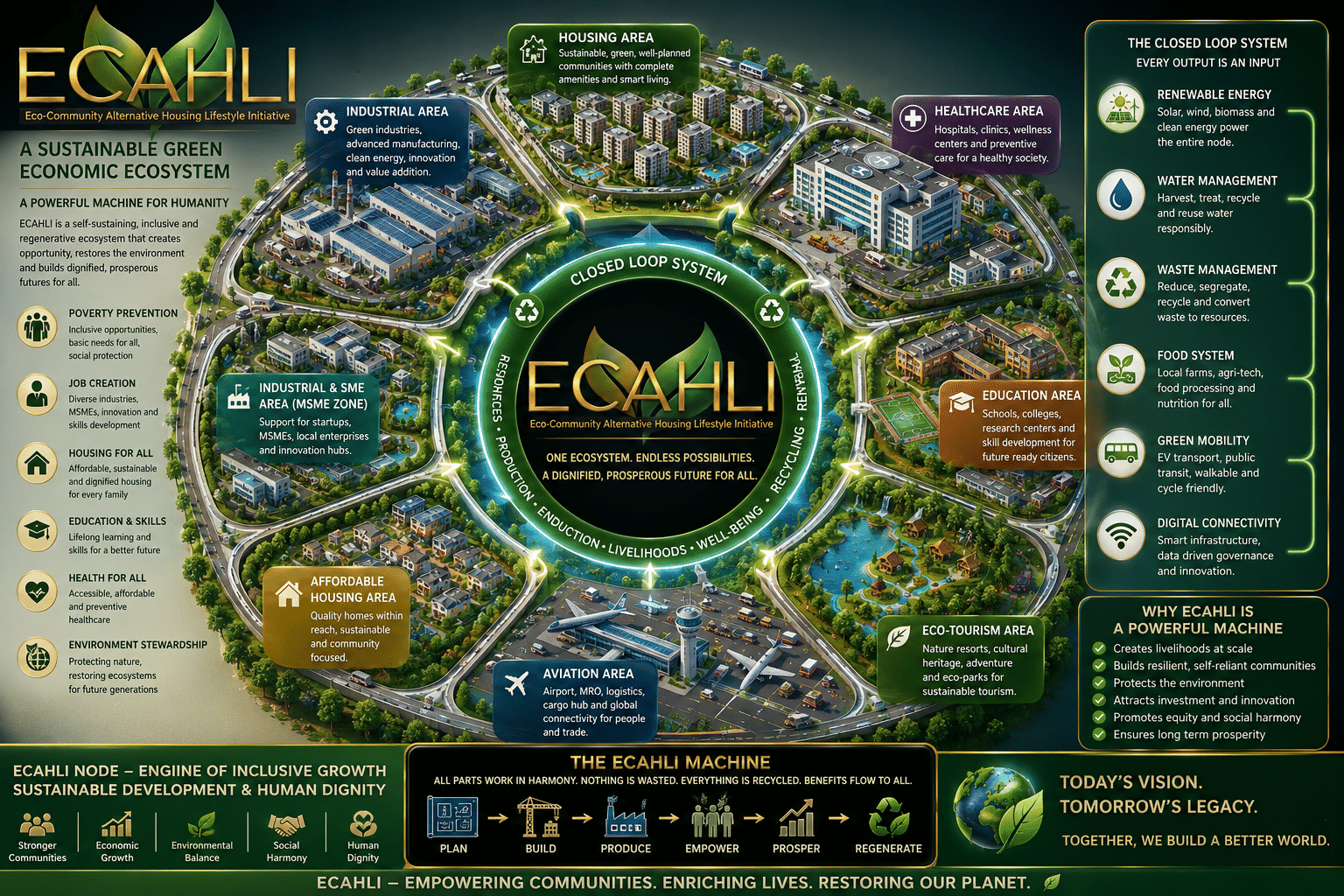
Housing, work, food, power, learning and care are designed together so a community is stable on every front.
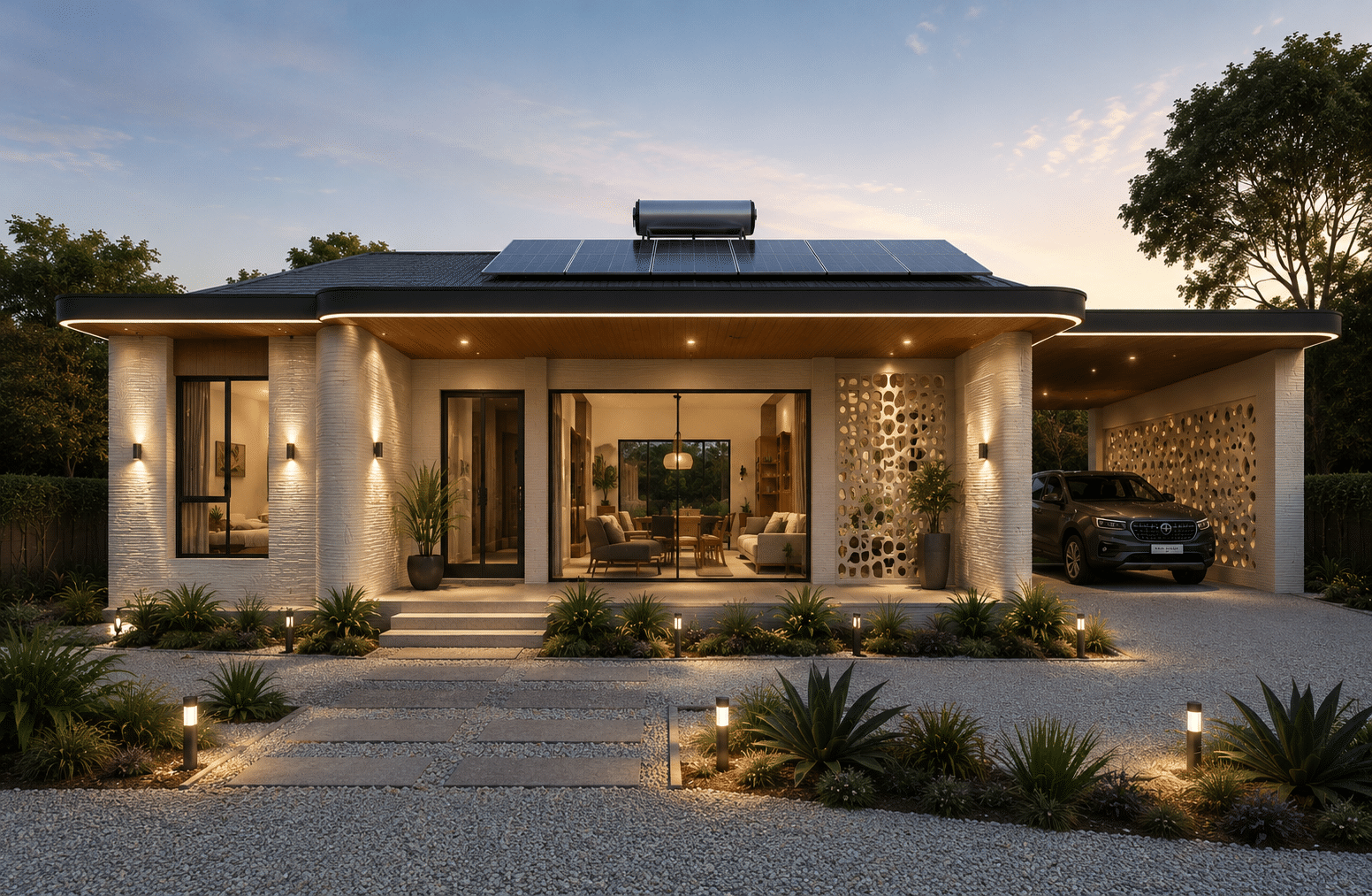
Safe, durable, energy-efficient homes with a path to secure tenure and ownership.
Construction, farming, manufacturing, logistics, energy and service jobs, plus training that leads to skilled careers.
Sustainable farm ecosystems, food processing and cold storage that cut waste and keep food affordable.
Renewable power for homes, services and industry, with lower costs and greater independence.
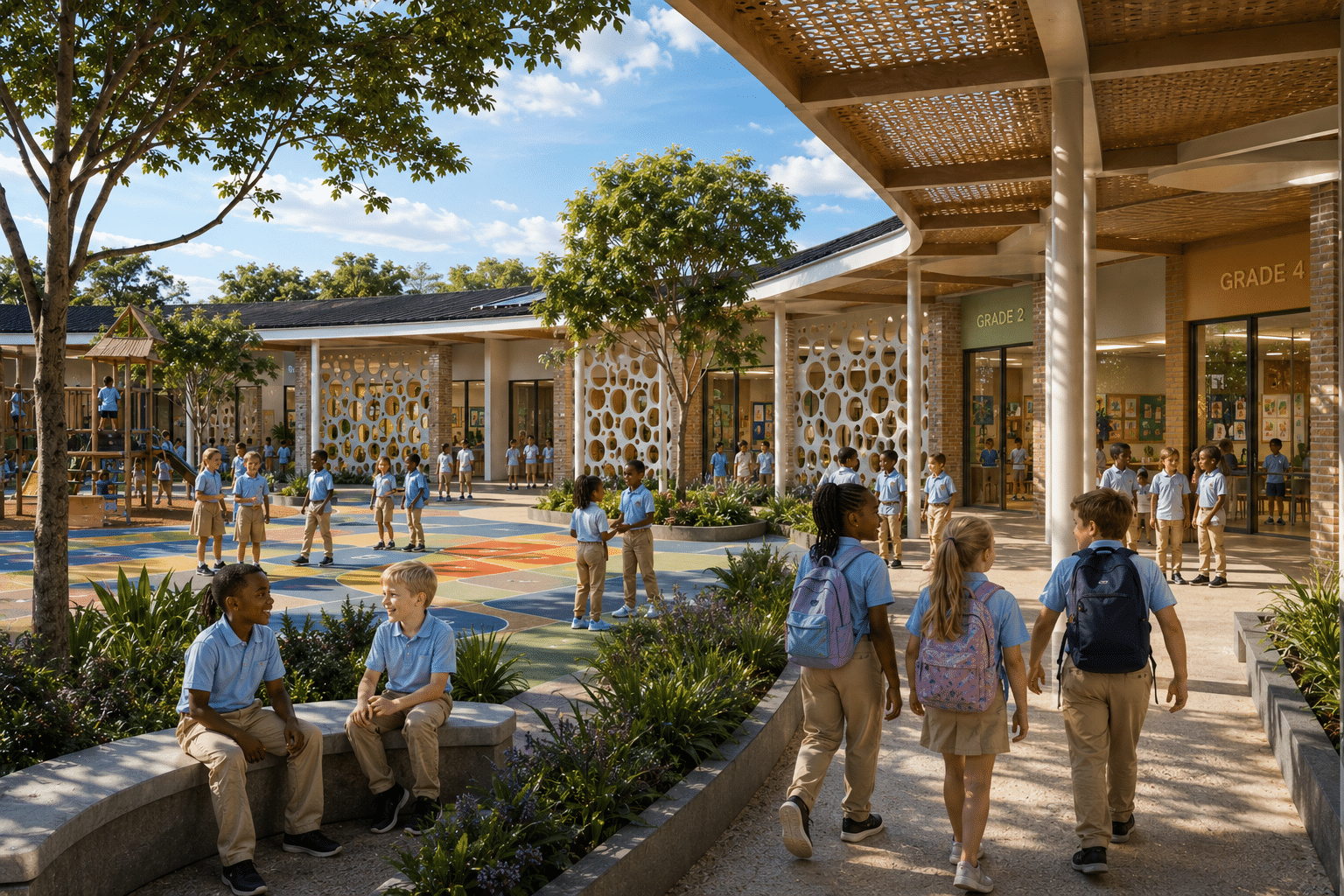
Primary schools, skills centres and adult learning that prepare people for the node's own industries.
Local clinics and wellbeing services, so care no longer means a long, costly journey.
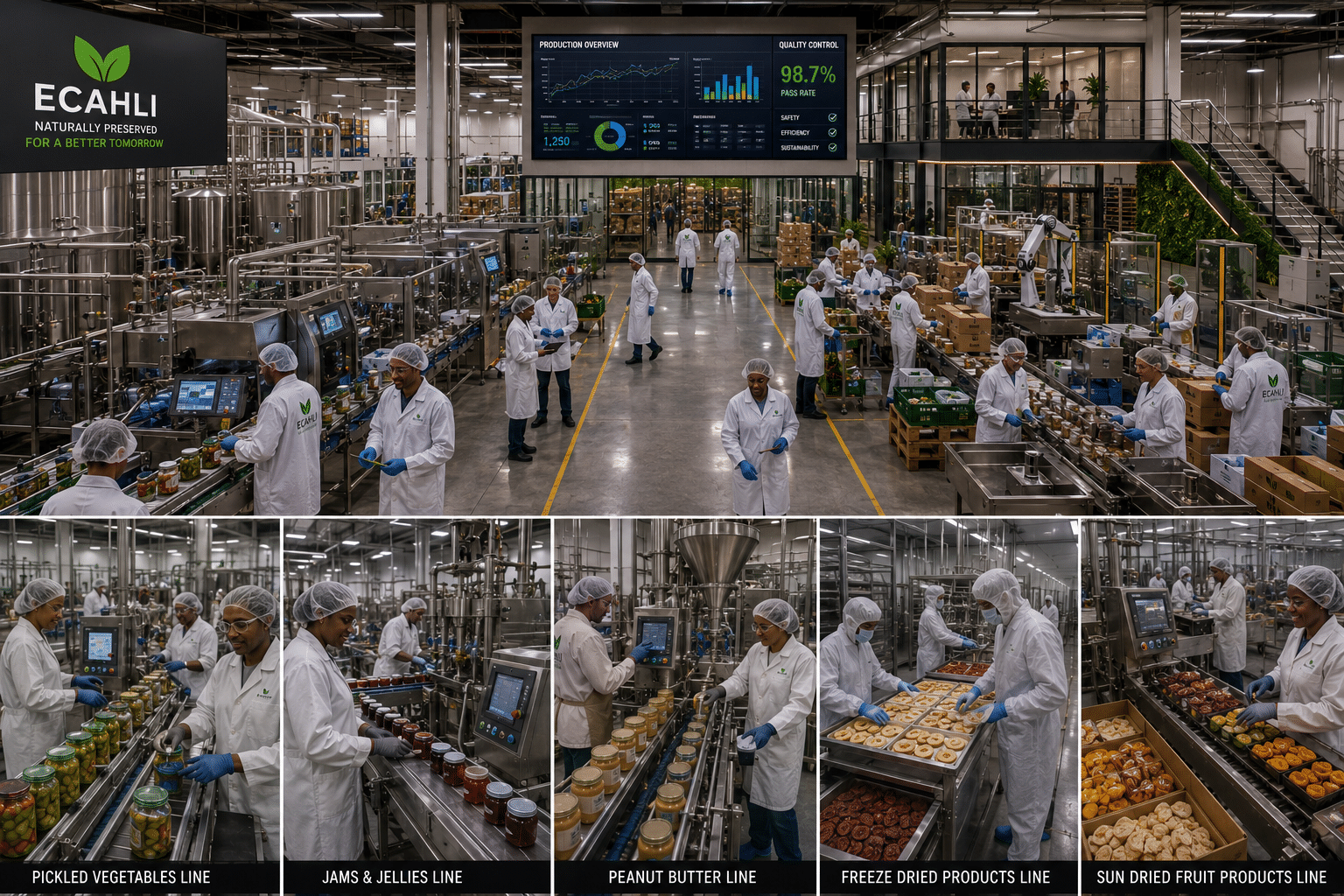
Food manufacturing, organic recycling and cold chain wholesale distribution hubs that create new regional economies.
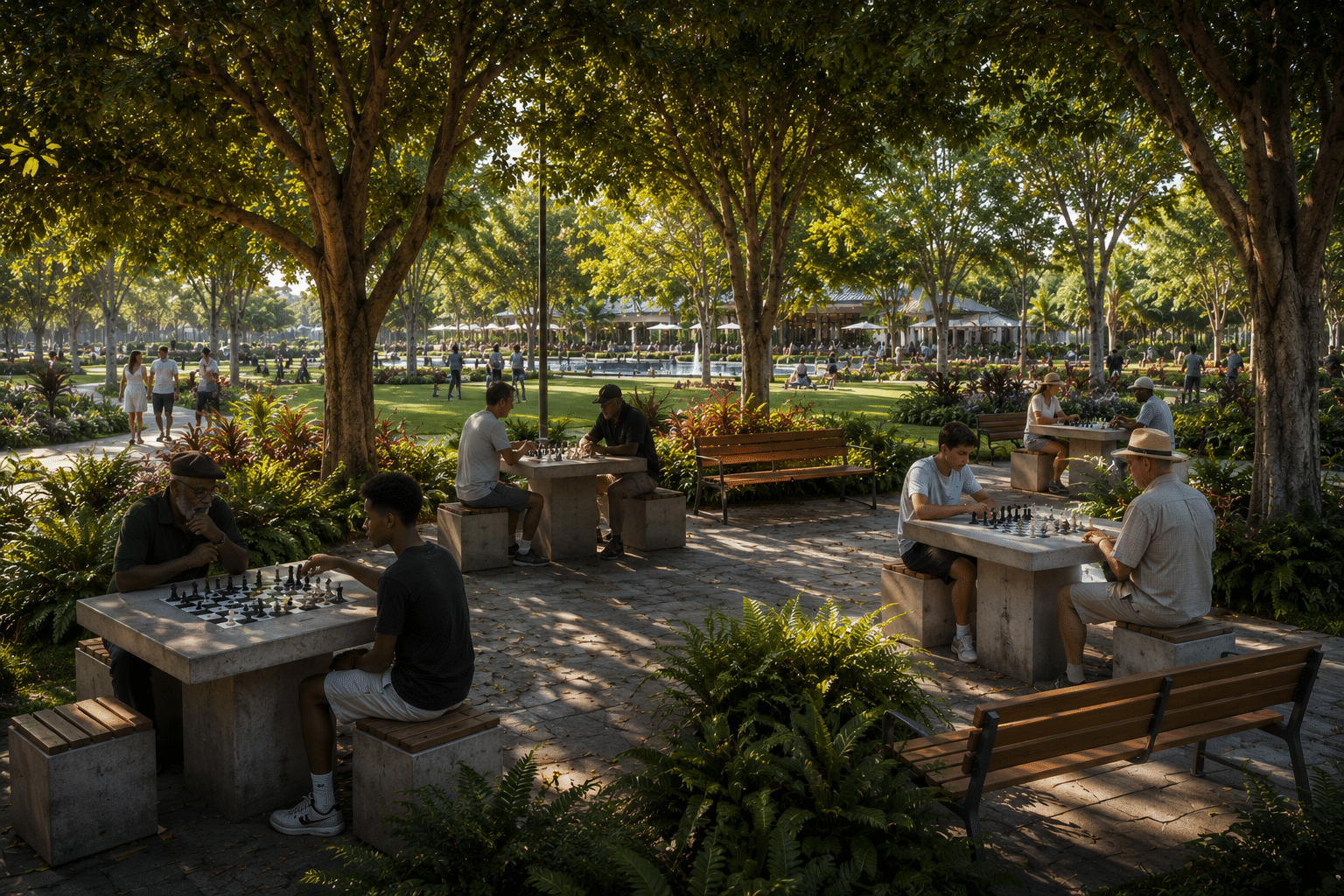
Water, sanitation, roads, connectivity, parks and meeting places that make a settlement a community.
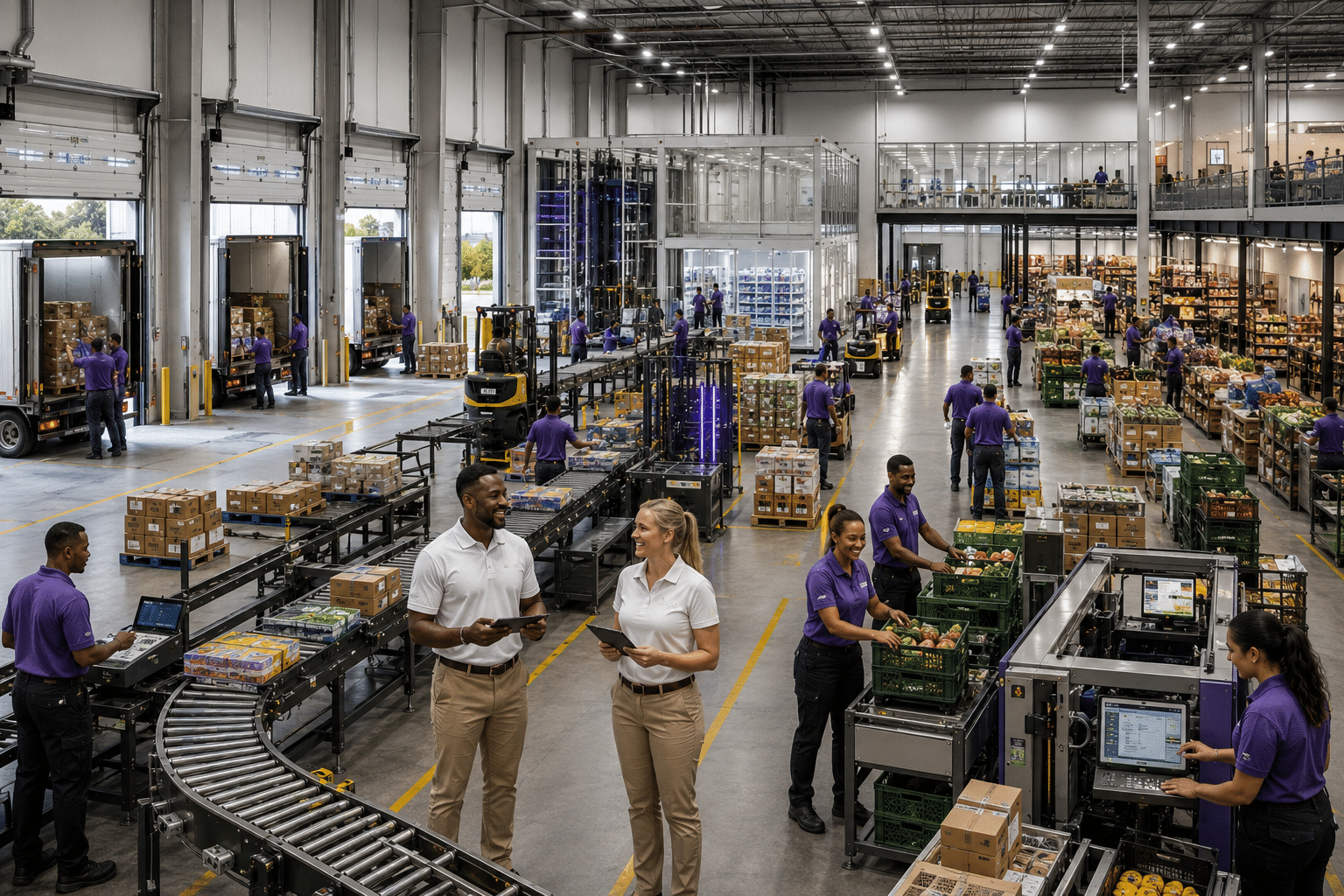
Farmers lose a large share of harvests between field and market. Every ECAHLI node includes cold chain wholesale distribution hubs that keep produce fresh, give farmers fair market access and supply surrounding towns.
ECAHLI is not a single project. It is a growing system of aligned action.
Impact is designed in from the first plan. Each node aims to deliver:
Safe homes, clean power and water, and everyday services close by.
New industries that keep value, and young people, in the region.
Work during construction and permanent careers in operations and industry.
Secure, affordable homes that families can build their lives around.
Education, healthcare, energy and markets within the community.
Schools and training linked directly to real local jobs.
Primary care and wellbeing support available locally.
Renewable energy, local food and diverse industry reduce exposure to shocks.
Where farms sell raw produce cheaply and import everything else, ECAHLI adds processing, cold storage and distribution so more value stays local.
Where villages and towns are emptying, ECAHLI gives people a reason to stay or return: homes, work and services in one place.
Where roads, grids and institutions never reached, ECAHLI brings the infrastructure with it and trains residents to run it.
The world needs more than aid and more than isolated buildings. It needs communities that can stand on their own.
Everyone deserves a decent home and the chance to earn a living.
Secure housing, food and income let families plan ahead.
Skills and industry open futures that were closed before.
Self-sustaining systems keep communities strong through hard times.
Children grow up with schools, health and prospects at home.
The ECAHLI design approach has received awards and recognition. That recognition reflects the quality of the thinking behind it.
Learn how ECAHLI works, explore a partnership, or connect with the platform to bring a node to your region, town or village.